
'As the PLA higher command is almost dismantled and instability spreads, India needs to be prepared for any eventuality,' cautions China expert Srikanth Kondapalli.

If Xi Jinping can establish control over the PLA Ground Force, relations between India and China will settle down to an even keel. The next few weeks will show whether Xi has finally succeeded in gaining control over the PLA Ground Force. That could bring about the substantive shift in India-China relations that both our leaders have been working for, observes Ambassador Prabhat Shukla.
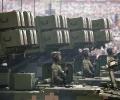
China's second-ranked general, He Weidong, is under investigation for corruption, along with nine other senior military officers punished for discipline violations and work-related crimes. This crackdown comes ahead of a key Communist Party conclave.
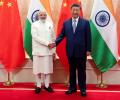
Senior officials from India and China's foreign ministries met in Beijing to discuss bilateral ties following a meeting between Prime Minister Modi and President Xi.

Sun Weidong is an expert on South Asia who worked closely with external affairs minister S Jaishankar.
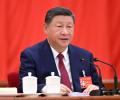
If Xi Jinping is dethroned in the future, the instrument for that may well be embedded within the PLA, notes former foreign secretary Shyam Saran.
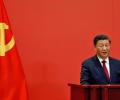
The Chinese Communist Party reaffirmed President Xi Jinping's leadership and backed a major purge of top military officials during a key meeting. The meeting also endorsed a new 5-year plan focused on domestic market resilience and self-reliance.

China's ruling Communist Party is holding its annual leadership conclave to discuss the new five-year plan, the impact of US President Donald Trump's tariff war, and the ongoing anti-corruption crackdown in the military.
It was a meeting at the official level, not at the political level, Hossain said, adding that there was no element of formation of any alliance.
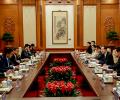
'We remain in touch with the Chinese side, in Beijing as well as in Delhi, to bring predictability in the supply chain.'

A total of 750 pilgrims have been selected through a computerised draw for the upcoming Kailash Manasarovar Yatra in Tibet, marking the resumption of the pilgrimage after a five-year gap. The Yatra's resumption is seen as an attempt to normalize India-China relations, which were strained by the eastern Ladakh border standoff. The pilgrimage will begin in June and continue until August, with pilgrims traveling in five batches via the Lipulekh route and ten batches via the Nathu La route. The selection process was deemed "fair, computer-generated, random, gender-balanced" by the Ministry of External Affairs (MEA), which organized the pilgrimage.
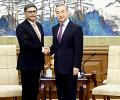
The Chinese Defence Ministry has stated that the Indian and Chinese militaries are implementing the resolutions to end the standoff in eastern Ladakh in a "compressive and effective manner." This follows the disengagement process completed late last year after a pact for troop withdrawal from Depsang and Demchok, the last two friction points in eastern Ladakh. The disengagement has paved the way for the resumption of various dialogue mechanisms between the two countries, with the aim of normalizing bilateral relations.
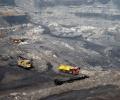
The 17 rare earth elements that are at the centre of the current crisis are critical components of everyday products -- from cars to jet engines to electronics like smartphones and flat-screen TVs.
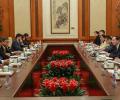
In the talks, China emphasised that the two sides should proceed from the fundamental interests of China, India and adhere to the strategic height and long-term perspective of China-India relations, the readout said.

The Ministry of External Affairs (MEA) has announced that India and China have reached an understanding to resume the Kailash Mansarovar Yatra in 2025. While an understanding has been reached, the modalities of the pilgrimage are yet to be firmed up. The Yatra has been suspended since 2020 due to the COVID-19 outbreak and non-renewal of Yatra arrangements by the Chinese side.

India is preparing to resume the Kailash Mansarovar Yatra, a pilgrimage to Mount Kailash in Tibet, after a three-year hiatus. The decision comes as part of efforts to improve relations between India and China, which have been strained since a military standoff in 2020. The two countries have also agreed in principle to resume flight services between them.
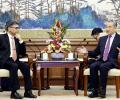
India and China have agreed to rebuild ties and resume people-to-people exchanges, including resuming direct flights and the Kailash Manasarovar Yatra this year. The two countries also discussed the resumption of dialogue mechanisms to address each other's concerns and move relations to a more stable path. The meeting comes after a period of strained relations following the Galwan Valley clashes in 2020.
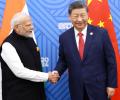
Chinese President Xi Jinping on Wednesday pledged to strengthen the strategic relationships with neighbouring countries by 'appropriately' managing differences and enhancing supply chain ties as China's tariff war with the United States escalated.
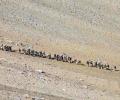
Foreign policy expert C Raja Mohan has said that the recent disengagement of troops with China in eastern Ladakh has given a small opening to India, but the "big issues" remain. He also stressed the importance of strengthening India's ties with the US for technological and economic growth.
Chinese Foreign Minister Wang Yi said on Friday that India-China relations have made positive strides and achieved a series of encouraging outcomes at all levels after last year's breakthrough ending the over four-year-long military standoff in eastern Ladakh. Wang's remarks came during his annual press conference as he replied to a question on how Beijing views the course of bilateral ties after the two countries ended the prolonged stalemate in the ties.

The foreign ministry's statement came amidst the reported visit of Foreign Minister Sun Weidong to Pakistan on a mediation mission.

India and China on Monday decided to resume the Kailash Mansarovar Yatra as the two sides agreed to take certain people-centric steps to 'stabilise and rebuild' ties.

Xu, 60, is expected to travel to New Delhi soon to take over his new posting.
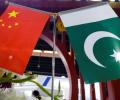
As China's Foreign Minister Sun Weidong visited Pakistan on a mediation mission, a statement from Foreign Ministry on Monday said it is maintaining close contacts with Pakistan and Iran to 'bridge their differences'.
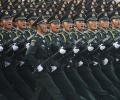
In a surprise development, a top Chinese military general has cast aspersions on the People's Liberation Army (PLA)'s much-publicised 'real combat-oriented exercises' as 'fake combat capabilities' at a time when Chinese President Xi Jinping has ordered it to prepare for 'maritime military struggles' to win wars.

In his farewell remarks posted on the Chinese embassy website, Sun said it is only natural for important neighbours China and India to have some differences but the key is how to handle the differences.

Speculation about the missing Chinese Defence Minister General Li Shangfu may have been removed and detained became rife after he was conspicuously absent at the meeting of the Central Military Commission (CMC) in Beijing on Friday.
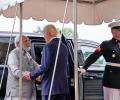
Foreign policy is always a work in progress and ups and downs are built into foreign policy process. What is permanent is national interest. Hopefully, this year, which will also witness general elections in the country, will also clear clouds in the foreign policy horizon, observes Rup Narayan Das.
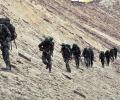
"Some steps are required for full normalcy, we have not reached there," Bagchi said.

Weidong said India and China "should live in peace and avoid conflicts."

The Wold Health Organisation has granted approval on June 1 to China's second COVID-19 vaccine, Sinovac, which was expected to strengthen China's vaccine diplomacy.
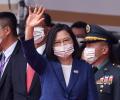
Taiwan on Sunday expressed gratitude to India and several other countries for their calls for exercising restrain and avoiding unilateral actions to change the status quo in the Taiwan Strait in the face of China's belligerent military posturing following United States House Speaker Nancy Pelosi's visit to the island.

Chinese Ambassador Sun Weidong has said peace and tranquility in the border areas with India is important but it is not the "whole story" of the bilateral relations and that the current status of the ties is obviously not in the fundamental interest of either side, remarks that came amid the Ladakh military standoff.

The marchers -- many wrapped in the red, yellow and blue flag of Tibet and dressed in traditional robes -- chanted and played drums, holding a minute of silence for their "martrys" before starting a "peace march" along Lake Geneva.

The chief of air staff said Chinese actions along the frontier including in the Ladakh sector are being monitored constantly and the IAF's overall preparations are part of continuing efforts irrespective of challenges from China.
The Central Committee members on Sunday elected a 25-member Political Bureau which picked the Standing Committee members to govern the country.

Narendra Modi also conveyed to Xi his appreciation for facilitating evacuation of around 650 Indian citizens from the Hubei province last week.

Held on the first day of Spring by the Chinese calendar, it began with a performance by dancers waving glowing green stalks to convey the vitality of the season, followed by an explosion of white and green fireworks that spelled the word "Spring".

Days after India and China agreed to have maritime cooperation, Beijing has favoured greater military ties with New Delhi, saying such exchanges would help build more "confidence and trust" between the two countries.
Speculations have been mounting over the whereabouts of China's next leader Xi Jinping, who has not been seen for over a week.Sources said Jinping, who is expected to be announced as the new leader of the Communist Party in the coming weeks, has suffered a mild heart attack.
